The Prepared Citizen Initiative Course

- Description
- Curriculum
Basecamp: Home
From Bystander to Guardian
What happens when the lights go out, the phones go silent, and the “pros” are too busy to help? The Street Shield Program is a high-energy, hands-on masterclass designed to turn ordinary neighborhoods into extraordinary rescue teams. This isn’t just a survival course; it’s a blueprint for building a resilient community where every neighbor knows exactly what to do when the grid goes dark.
Through a series of fast-paced, practical lessons, students move beyond basic “prepping” to master the skills of real-world first responders. From building Micro-Climates to survive extreme weather and using Stop the Bleed techniques to save lives, to hacking the airwaves with GMRS radios and organizing a Neighborhood Tool Library, this course covers it all. By the end, you won’t just have a Go-Bag; you’ll have the “Disaster Brain” hacks, the technical skills, and the community connections to lead your street through the first 72 hours of any crisis.
Course Highlights:
-
The Power of One: Mastering individual survival skills like thermal management and improvised medicine.
-
The Power of Many: Mapping neighborhood assets and creating a shared communication network.
-
Tactical Response: Learning professional Triage, Light Search & Rescue, and Fire Suppression.
-
Mental Toughness: Psychological First Aid techniques to manage panic and lead with a “mission-first” mindset.
The Mission: To ensure that when the unexpected happens, you aren’t just waiting for help—you are the help.
-
1
 Risk Assessment: How to identify local hazards (earthquakes, floods, wildfires, or grid failure).
Scanning the Horizon (Local Risk Assessment)
Before you buy your first emergency kit, you need to know exactly what you’re up against. This lesson teaches you how to be a "disaster detective" by identifying the specific threats unique to your home, street, and region.
You will move beyond general fears to map out Macro Hazards (like earthquakes and hurricanes) and Micro Hazards (like that one creek that always floods or the old oak tree leaning over your power lines). Using the Risk Matrix—a simple tool used by professional emergency managers—you’ll learn how to prioritize your time and money on the disasters that are most likely to happen, ensuring you aren't preparing for a blizzard while living in a flood zone.
-
2
The Go-Bag vs. Stay-Box: Designing a 72-hour mobile kit and a 2-week home supply.
Backpack vs. Bin — Your Survival Starter Kit
Imagine the fire alarm goes off and you have to leave right now—or a huge storm hits and you’re stuck inside for two weeks. Do you have what you need to survive? This lesson breaks down the two most important kits every person needs, using simple language that even a 12-year-old can master.
We’re ditching the boring checklists and teaching you how to build a Go-Bag for when you’re on the run and a Stay-Box for when you’re hunkered down at home. You’ll learn the "Big 5" essentials for your backpack, the secret to the "Bucket Bathroom," and why a simple deck of cards might be your most important survival tool when the Wi-Fi goes dead.
-
3
Utility Control: How to safely shut off gas, water, and electricity in your specific home or apartment.
House Command — How to Pull the Plug on Disaster
Think of your home as a giant machine. In a disaster, that machine can "glitch"—pipes can burst, wires can spark, and gas can leak. If you don't know how to shut them down, a small problem can quickly turn into a total loss. This lesson teaches you how to be the Master of the House by mastering the three big switches: Electricity, Water, and Gas.
Designed for young heroes and beginners alike, we skip the complicated plumbing manuals and focus on the "Seek and Stop" method. You’ll learn how to find your home’s hidden "Kill Switches," why a "T-shape" is the most important symbol in survival, and the #1 rule of the "Rotten Egg" smell. By the end of this module, you won’t just be a resident; you’ll be the person who knows exactly how to save the house when seconds count.
-
4
The Paper Trail: Digitizing and securing vital documents (deeds, IDs, insurance) in a "grab-and-go" binder.
The Life Binder — How to Save Your Secrets and Stories
If you had to leave your house in a hurry, you could replace your clothes and your toys—but could you prove who you are? This lesson teaches you how to create a "Life Binder," a portable, waterproof treasure chest that holds your family's most important "magic papers."
We’ll show you how to identify the "Big Three" must-haves—from birth certificates to your pet’s medical records—and how to build a Digital Twin so your information is safe in the "Cloud" even if the paper gets wet. You’ll learn the secret of the "30-second grab," why a simple USB drive is a survival superpower, and how to take "Evidence Photos" of your stuff so insurance companies can help you fix things later. It’s not just about paperwork; it’s about making sure your life can get back to normal as fast as possible.
-
5
Emergency Comms: Setting up a family communication plan, including "out-of-area" contacts.
The Family Bat-Signal — How to Talk When the Towers Fail
When a disaster hits, everyone’s first instinct is to call home—but that’s exactly why the phone lines "jam" and stop working. This lesson teaches you how to communicate like a pro when the bars on your phone disappear.
You’ll learn the "Text, Don't Talk" secret, why a text message can squeeze through a "jammed door" when a phone call can't, and how to use a "Long-Distance Legend" to connect your family even if you're miles apart. We’ll also help you pick two "X-marks-the-spot" meeting places so you never have to wonder where your family is. By the end of this module, you’ll have a foolproof plan to stay connected, even if the internet goes dark.
-
6
Water Procurement: Techniques for filtration vs. purification and identifying "hidden" water sources in a home.
The Water Hunt — Finding and Cleaning H2O
If the water stopped flowing from your kitchen sink today, where would you find your next drink? Most people would panic, but this lesson turns you into a Water Scout who can find "liquid gold" hidden right inside your house.
We’re going on a treasure hunt to find the gallons of clean water sitting in your water heater, your pipes, and even your toilet tank (the clean part!). You’ll also learn the "Science of Clean": the difference between Filtration (getting the chunks out) and Purification (killing the invisible monsters). By the end of this module, you’ll know how to turn a dirty rain barrel into a safe drink and why a simple pot of boiling water is the ultimate survival tool.
-
7
Emergency Sanitation: Managing human waste without a working sewer system (the "Two-Bucket" method).
The Two-Bucket Throne — Surviving a Bathroom Emergency
It’s the one thing nobody wants to think about: What do you do when the toilet won't flush? When the water goes out, your bathroom can quickly become the most dangerous room in the house. This lesson teaches you the "Two-Bucket Method"—a simple, genius system used by professional explorers and disaster experts to keep things clean, safe, and (believe it or not) smell-free.
We’re breaking down the science of why you should never mix "Number 1" and "Number 2," and how a simple bag of kitty litter or shredded newspaper can act like a "magic flush." You’ll also learn the "Pool Noodle Hack" for a more comfortable seat and how to build a hand-washing station when the faucets are dry. It’s a "gross" subject, but mastering it is the difference between a minor inconvenience and a major health crisis.
-
8
Off-Grid Power: Introduction to portable solar, power banks, and battery maintenance.
Power Up — How to Be Your Own Power Plant
What happens when the "Giant Battery" (the electrical grid) that runs your house stops working? Your phone dies, the lights go out, and your favorite gadgets become expensive paperweights. This lesson teaches you how to master the three parts of off-grid energy: The Source, The Tank, and The Straw.
You’ll learn how to "chase the sun" with portable solar panels, the difference between a pocket-sized power bank and a heavy-duty power station, and the "80/20 Rule" that keeps your batteries from dying of old age. We’ll even teach you how to spot "Power Gulpers"—the appliances that will drain your energy in seconds—so you can keep the lights on for days instead of minutes. It’s time to stop worrying about the dark and start making your own power.
-
9
Thermal Management: Staying warm or cool without HVAC; building "micro-climates" inside a room.
The Human Thermostat — Mastering Your Micro-Climate
What do you do when the AC dies in a heatwave or the heater cuts out in a blizzard? Your house can turn into an oven or a freezer pretty fast. This lesson teaches you how to stop fighting the whole house and start winning the "space race" by building Micro-Climates—tiny zones of perfect temperature right where you are.
You’ll learn the "Fortress Strategy" for winter, including how to turn a dining room table or a camping tent into a cozy, warm cave using nothing but your own body heat. For summer, we’ll dive into "Swamp Magic"—using wet sheets and wind tunnels to chill a room without a single drop of electricity. From the "Bottle Trick" to the "Cave Method," you’ll master the low-tech secrets to staying comfy when the grid goes dark.
-
10
The Bug-Out Logic: When to stay vs. when to go—evaluating road conditions and evacuation routes.
The Great Escape — Staying Safe vs. Getting Out
In a disaster, the biggest decision you’ll ever make is: Do I stay or do I go? Making the wrong choice could mean getting stuck in a dangerous house or, even worse, getting trapped in a giant traffic jam while a storm approaches. This lesson teaches you the "Bug-Out Logic"—the simple rules experts use to decide when to hunker down and when to hit the road.
You’ll learn how to read the "Five-Alarm" warnings that mean it’s time to leave, how to spot "Road Traps" like flooded streets and gridlock, and why the "Half-Tank Rule" is your car’s best friend. We’ll also show you how to map out a "Route B" so you aren't stuck when everyone else is trying to use the highway. It’s all about staying one step ahead of the chaos and knowing exactly when to move.
-
11
Stop the Bleed: Using tourniquets and pressure dressings for life-threatening trauma.
Stop the Bleed — How to Save a Life in Seconds
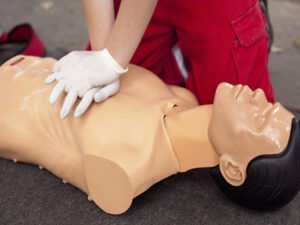
In a major accident or disaster, the most dangerous thing isn't the storm—it's losing too much blood. This lesson turns you from a bystander into a Life-Saver by teaching you the three simple steps to stop life-threatening bleeding.
Forget what you see in the movies; we’re learning the real-world A-B-C method used by doctors and soldiers. You’ll learn how to use your own body weight to "compress" a wound, how to "pack" a deep injury, and how to master the Tourniquet—the ultimate "emergency faucet" that can shut off a leak in an arm or leg. It’s intense, it’s fast, and it’s the most important skill you can have when seconds count.
-
12
Triage Basics: Learning the S.T.A.R.T. method (Simple Triage and Rapid Treatment) to prioritize victims.
The Emergency Traffic Controller — Mastering Triage
In a big emergency, you might find yourself in a crowd where lots of people are hurt at once. How do you decide who to help first? This lesson teaches you Triage, the professional system of "sorting" used by paramedics and disaster teams to save as many lives as possible.
Using the simple S.T.A.R.T. method, you’ll learn how to assign colors—Green, Yellow, Red, and Black—to victims in seconds. We’ll teach you the "30-2-Can Do" shortcut to spot life-threatening emergencies by checking just three things: breathing, blood flow, and brain power. It’s a fast-paced, high-stakes skill that ensures the right help gets to the right person at the right time.
-
13
Improvised Medicine: Creating splints and slings from everyday household items.
The MacGyver Medic — DIY Splints and Slings
What do you do if someone breaks an arm or a leg and your medical kit is miles away? You turn into a MacGyver Medic. This lesson teaches you how to see the "survival potential" in everyday objects—turning junk drawers and closets into life-saving tools.
You’ll master the art of the "Cardboard Sandwich" to freeze a broken bone in place and learn the "T-Shirt Hack" to create an instant arm sling without using a single knot. We’ll show you how to use magazines, towels, and even broomsticks to protect an injury, along with the vital "CMT Test" to make sure your DIY splint isn't too tight. It’s a hands-on guide to staying calm and being creative when the pressure is on.
-
14
Long-Term Care: Managing wounds and hygiene over several days when "911" isn't coming.
The Long Haul — Being the House Medic
In a major disaster, the ambulance might not arrive in ten minutes—it might take three days. When "911" isn't an option, small scratches can become big infections, and poor hygiene can make a stressful situation much worse. This lesson teaches you how to transition from a "First Responder" to a Long-Term Caretaker for your family.
You’ll learn the "Keep it Pink" rule for monitoring wounds, how to spot the dangerous "Red Streak" of infection, and the secret to a "Dry Shower" using only two baby wipes and a bit of strategy. We’ll also show you how to maintain a "Health Log"—the ultimate tool for tracking medicine, water intake, and recovery. It’s about more than just bandages; it’s about keeping your family healthy, clean, and comfortable until help finally arrives.
-
15
Psychological First Aid: Managing panic and "Disaster Brain" in yourself and others.
Mind Games — Beating "Disaster Brain"
When the sirens go off or the power cuts out, your body's "Survival Switch" flips on, sending your heart racing and your thoughts spinning. This is "Disaster Brain," and if you don't know how to manage it, you can't use any of your other survival skills. This lesson teaches you Psychological First Aid—the art of hacking your own brain to stay cool when everyone else is losing their heads.
You’ll master the "Box Breathing" technique used by elite special forces to reset their nervous system in seconds and the "5-4-3-2-1 Grounding" trick to stop a panic attack in its tracks. We’ll also cover how to lead others through the chaos by using the "Low and Slow" voice and the power of giving a "Small Job" to turn someone’s thinking brain back on. It’s the ultimate mental armor for any emergency.
-
16
Team Organization: Understanding the Incident Command System (ICS)—who is in charge during a crisis?
The Neighborhood Startup (ICS Basics)
When disaster strikes, chaos is the first enemy. This lesson strips away the complex government jargon of the Incident Command System (ICS) and teaches you how to organize your neighbors like a highly efficient "emergency startup."
You will learn how to assign simple roles—The Quarterback, The Doers, The Getters, and The Map-Keepers—to ensure that everyone’s energy is spent saving lives and property rather than arguing over who’s in charge. By the end of this module, you’ll know how to build a chain of command that prevents burnout, stops dangerous rumors, and keeps every "team member" safe while they work.
-
17
Light Search & Rescue: Safe techniques for debris removal and searching damaged buildings.
The Rescue Scout — Light Search and Rescue
After a disaster, your neighborhood might look like a giant obstacle course. While it's tempting to rush in to help, real rescuers know that a "hero" who isn't careful just becomes another person who needs saving. This lesson teaches you the professional tactics of Light Search & Rescue (SAR)—the art of finding and helping people safely without getting trapped yourself.
You’ll learn the "Two-Out" Buddy Rule, how to perform a "Size-Up" to spot hidden dangers like gas leaks and live wires, and the secret language of "X-Markings" left on doors. We’ll also dive into the physics of rescue, teaching you the "Lift an Inch, Crib an Inch" method to move heavy debris using leverage rather than just muscle. It’s about being the smartest person on the scene so everyone gets home safely.
-
18
Neighborhood Mapping: Identifying which neighbors are vulnerable (elderly, disabled) and who has specialized tools.
The Neighborhood Grid — Mapping Your Team
When a disaster strikes, your neighbors are your closest allies. But do you know who on your street has a chainsaw and who needs help getting down the stairs? This lesson turns you into a Neighborhood Strategist by teaching you how to map out the "superpowers" and "vulnerabilities" of the people living right next door.
You’ll learn how to identify Human Assets (like nurses, mechanics, or people who speak multiple languages), how to spot Priority Neighbors who might need an extra hand during an evacuation, and how to keep a mental "Tool Inventory" so you know exactly where the ladders and generators are located. It’s not about being nosy—it’s about building a "Street Shield" where everyone works together to make sure no one is left behind.
-
19
Fire Suppression: Assessing small fires and knowing when to use an extinguisher vs. when to retreat.
The Fire Fighter — Attack or Retreat?
Fire is a fast-moving monster that can double in size every minute. When a flame breaks out, you only have seconds to decide: Can I put this out, or do I need to get out? This lesson turns you into a "Smart Defender" by teaching you how to assess a fire’s size, smoke, and escape routes before you ever reach for a tool.
You’ll master the P.A.S.S. technique—the universal "cheat code" for operating a fire extinguisher—and learn the critical difference between a "trash can fire" and a "ceiling fire." We’ll also cover the dangerous mistakes to avoid, like why you should never put water on a grease fire, and how to spot the "Retreat Signal" that tells you the monster has grown too big to fight. It’s about having the courage to act and the wisdom to know when to run.
-
20
Resource Sharing: Setting up a community "tool library" and shared communications (GMRS/HAM radio).
The Neighborhood Power-Up — Libraries and Airwaves
In a real emergency, the "Lone Wolf" is often the first to run out of supplies. The true survivors are the ones who turn their neighborhood into a Team. This lesson teaches you how to organize a community "Tool Library" and a "Radio Network" so that your street has everything it needs to handle a crisis, from clearing fallen trees to getting news when the internet goes dark.
You’ll learn how to inventory "Heavy Lifter" tools like chainsaws and generators, and how to master the airwaves using GMRS and HAM radios. We’ll break down the P.A.C.E. Plan (Primary, Alternate, Contingency, and Emergency) so your family and neighbors always have a way to talk, even if cell towers are down. It’s about sharing resources, sharing information, and making sure your entire community powers up together.